
◉ Localise
Arabic and RTL ad creative, at scale.
Producing Arabic ad creative at scale requires mirroring the layout, not translating the copy. A right-to-left campaign has to move the logo, the call to action and the reading order to the opposite side, reshape the type so letters join correctly, and reset numerals and dates. ElarisLabs Localise does that from one approved master, holding the logo, palette and safe zones fixed across every market.
Last updated 11 September 2026
Doha today, 44°
Taste the difference
الدوحة اليوم، ٤٤°
تذوّق الفرق
◉ The problem
Translation is not localisation.
Arabic is not English written backwards. It is a cursive script where letters change shape depending on their position in a word, set in a layout where the reading order runs right to left. A tool that swaps the words and keeps the layout produces something that reads as foreign to the market you are trying to reach.
Three failures show up constantly in ad creative built by teams working in a left-to-right tool. The logo stays in the top left, so the first thing an Arabic reader sees is the empty corner. The call to action stays on the left, so the eye finishes the ad and finds nothing there. And the Arabic is set in a Latin typeface that has no Arabic glyphs, so the letters render disconnected, which is roughly as readable as English printed with a space between every letter.
None of that is a translation problem. It is a layout problem, and it has to be solved by the system that composes the ad.
◉ The checklist
What RTL localisation actually requires.
Six things have to change when a campaign moves from English to Arabic. Any tool that handles fewer than all six will produce creative a native reader can tell was made somewhere else.
Mirrored layout direction
Logo, call to action, badges, progress indicators and image alignment all move to the opposite side. The composition mirrors, the photography does not.
Correct Arabic type
An Arabic typeface with the right glyph set, so letters connect and ligatures form. Latin fonts with Arabic pasted in render as disconnected characters.
تذوّق الفرق
Retypesetting, not resizing
Arabic runs shorter than English in word count but taller in line height. Line breaks, leading and text-block height have to be reset for the new script, not stretched to fit the old box.
Numerals and dates
Eastern Arabic numerals where the market uses them, Western where it does not. Gulf markets differ from Levant markets, and the ad has to follow the market it runs in.
١٠٨٠ × ١٣٥٠
Safe zones that mirror
Platform safe zones are not symmetrical. A Story with a right-aligned interface element needs the Arabic composition to clear a different edge than the English one.
Brand rules that hold
Logo lockup, clear space, palette and typographic hierarchy stay identical across markets. Localising the layout should never mean re-approving the brand.
◉ Real work
Arabic creative we shipped.
Not mockups. A fully mirrored Arabic master and the live Doha out-of-home boards it belongs to, all governed by a single McDonald's brand kit.
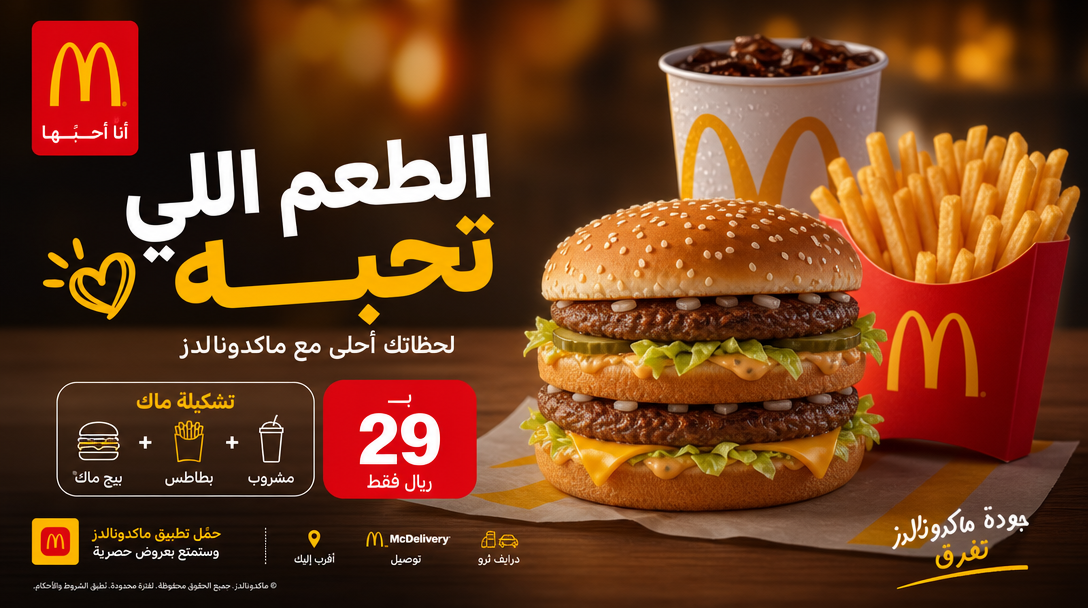
The English lockup sits top-left; this Arabic master flips it top-right, sets the copy in a joined Arabic face, and keeps the red, the arches and the “I'm lovin' it” mark exactly on brand. Same master, opposite direction.
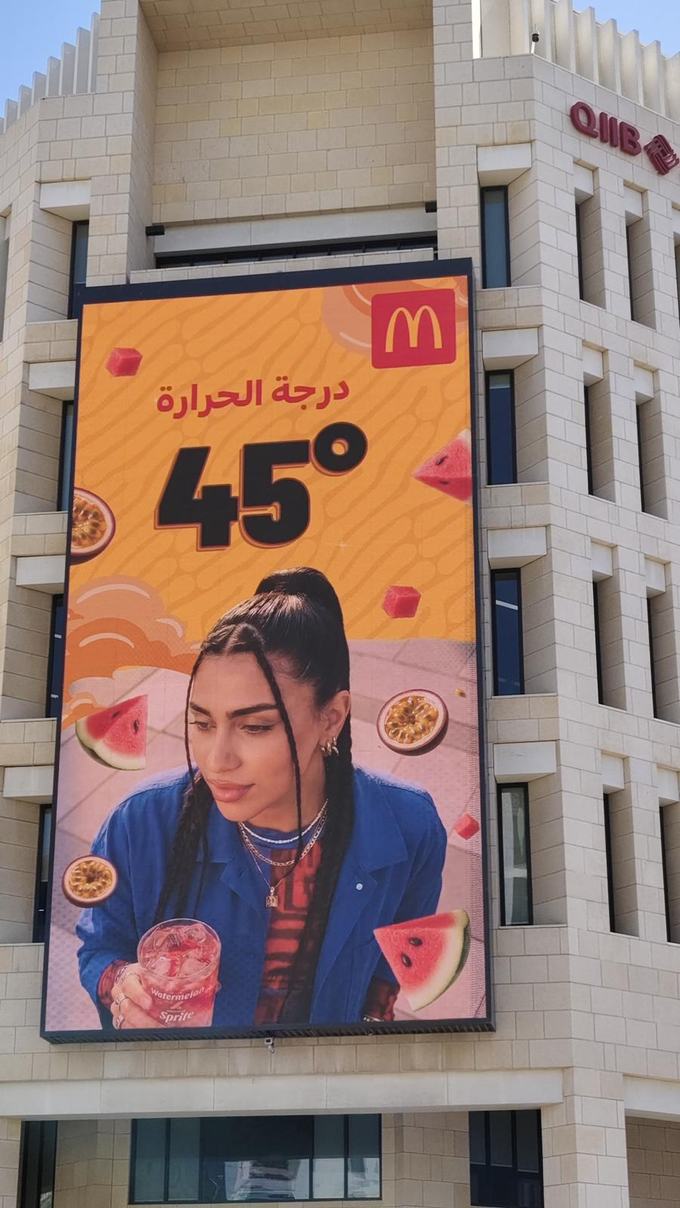
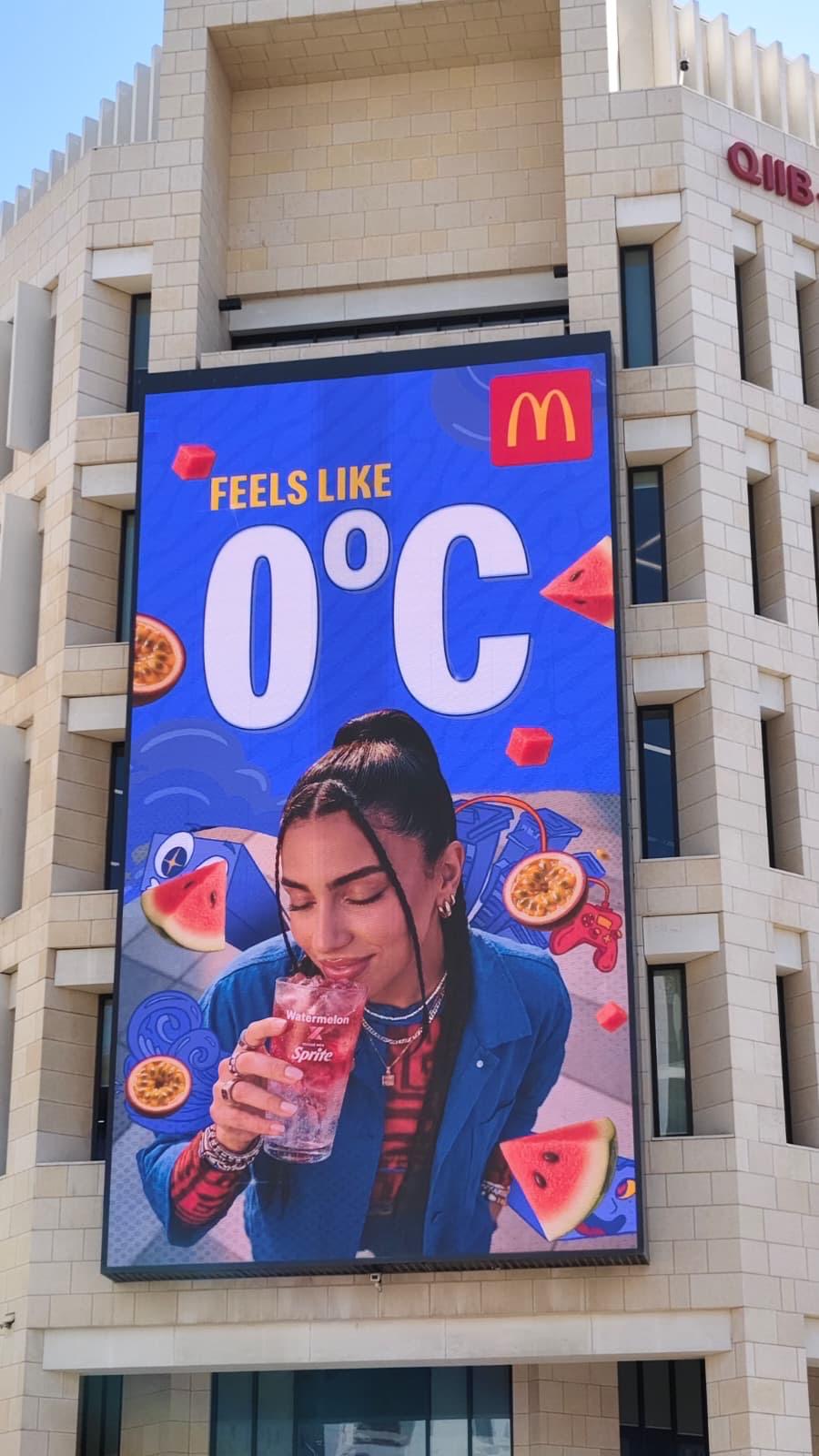
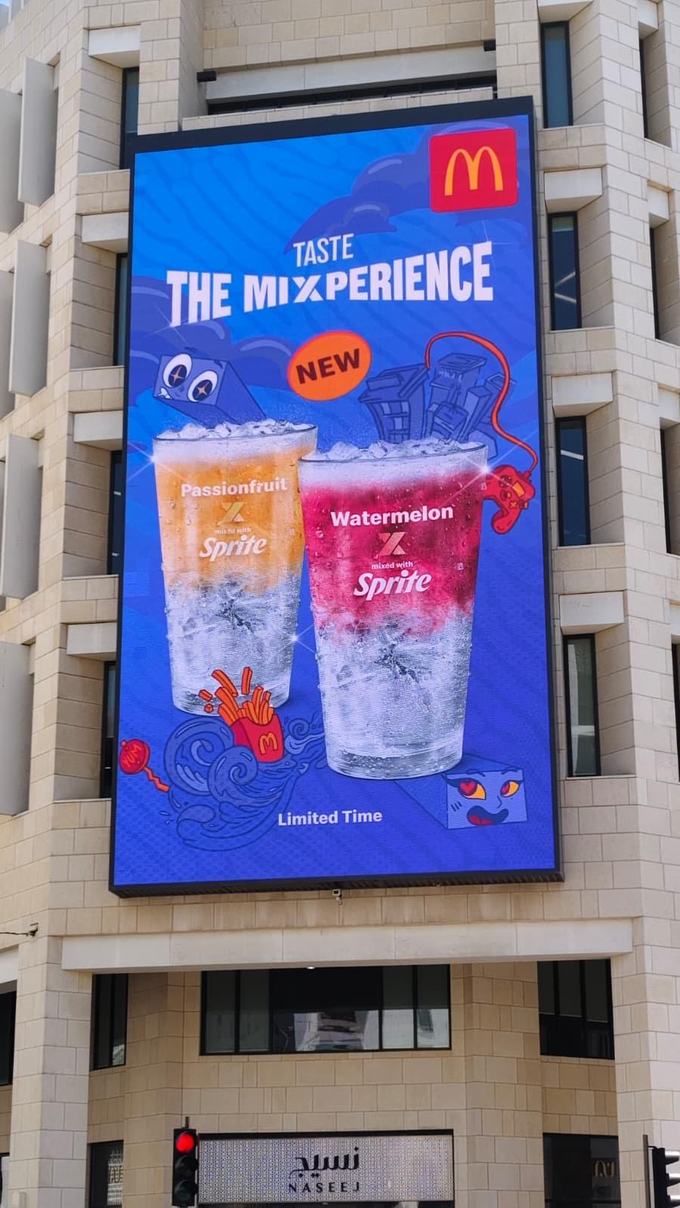
Full breakdown of the campaign, the weather trigger and the numbers is in the McDonald's Qatar live DOOH case study.
More live boards in Qatar.
Four Qatar Development Bank portfolio brands, composed from their own kits and booked to roadside and mall screens around Doha. Bilingual lockups, Latin and Arabic, on the same pipeline.
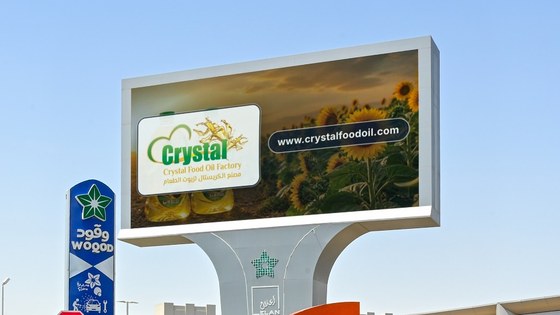
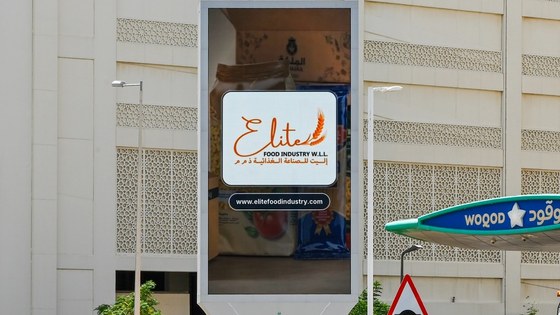
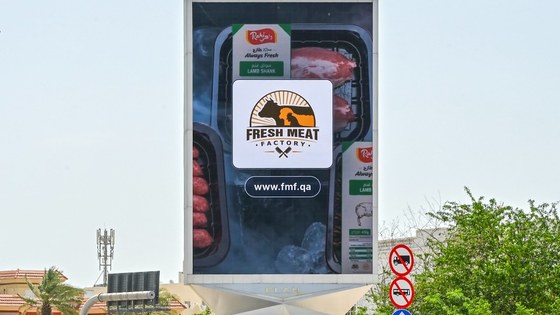
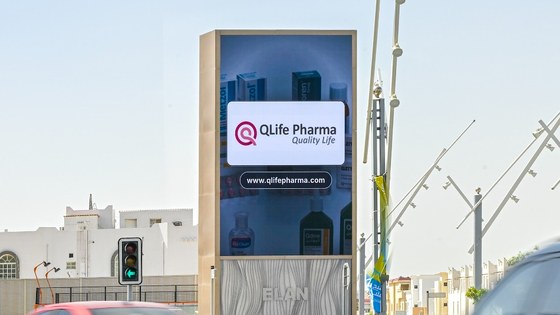
 Screen networks we ship to
◉ The comparison
Three approaches, and what each one breaks.
Most AI ad tools fall into one of three groups. The difference between them is not output quality. It is whether the system understands direction at all.
| Requirement | Translate and crop | Template editors | ElarisLabs Localise |
|---|---|---|---|
| Copy translated | Yes | Yes, manually | Yes |
| Layout mirrored | No, layout is unchanged | Only if a designer rebuilds it | Yes, automatically |
| Arabic typeface applied | Falls back to the Latin font | Yes, if the designer selects one | Yes, from the brand kit |
| Text retypeset for the script | No, text is scaled to fit | Manual reflow per asset | Yes, per asset |
| Numerals localised | No | Manual | Yes, per market |
| Safe zones mirrored | No | No | Yes |
| Effort for 11 sizes, 2 markets | Fast, and wrong | Days of designer time | One run from the master |
◉ The workflow
How Localise works.
Localise runs on the master you already signed off. It does not regenerate the creative, which is the reason the Arabic version still looks like the campaign your brand team approved.
Approve the master once
Build or upload the English board and sign it off. That approved master becomes the reference every market is derived from, so nothing downstream re-opens the brand conversation.
Add the markets
Pick the target languages. Arabic, Hebrew, Urdu and Farsi are flagged as right-to-left, so the composition mirrors rather than translating in place.
Localise composes each version
Copy is retypeset in the correct script, the layout mirrors, numerals reset for the market, and the logo, palette and safe zones stay locked to the brand kit.
Export or schedule
Take the full set as a ZIP, or send it straight to the scheduler and book it into the week across Meta, TikTok, LinkedIn, YouTube and out of home.
◉ The proof
Live on the street in Doha.
ElarisLabs built a weather-reactive out of home campaign for McDonald's Qatar, running in English and Arabic across a nine-screen digital network operated by ELAN Media. Each screen carried a live temperature reading next to the creative, in both language versions, updating as the day got hotter.
The Arabic boards were not separate artwork. They came off the same approved master as the English boards, mirrored and retypeset. Read the full case study.
◉ Coverage
Languages.
Four right-to-left scripts are handled with mirrored composition. The rest run as left-to-right retypesetting from the same master.
◉ Go deeper
The rest of the picture.
◉ FAQ
Arabic and RTL ad creative, answered.
What is RTL ad localisation?
RTL ad localisation is the process of adapting an advertisement for a right-to-left language such as Arabic, Hebrew, Urdu or Farsi. It involves translating the copy, mirroring the layout so the logo and call to action move to the opposite side, setting the text in a typeface with the correct script, retypesetting the text blocks for the new line lengths, and localising numerals and dates for the target market.
Why can't I just translate the text and keep the layout?
Because the reading order changes. In an Arabic layout the eye enters at the top right and finishes at the bottom left, so a logo in the top left and a button in the bottom right both land in the wrong place. Arabic is also cursive, so a Latin typeface without Arabic glyphs renders the letters disconnected and effectively unreadable.
Is mirroring the same as flipping the image?
No. Flipping reverses everything, including photography, faces and any Latin text in the frame, which produces a broken ad. Mirroring changes the composition direction only: the layout elements move to the opposite side while the imagery and the brand lockup stay correctly oriented.
How does ElarisLabs handle Arabic type?
The Arabic typeface is part of the brand kit, alongside the Latin one. When Localise composes an Arabic version it sets the copy in that face, so letters join and ligatures form correctly, and it reflows the text block for the line height Arabic needs rather than scaling the English block to fit.
Which numerals should an Arabic ad use?
It depends on the market. Gulf markets frequently use Eastern Arabic numerals, while parts of North Africa and the Levant commonly use Western ones. Localise sets numerals per market rather than per language, so a Qatar board and a Morocco board can differ while running off the same master.
Does the Arabic version need separate brand approval?
No, and that is the point of running it from an approved master. The logo lockup, clear space, palette and typographic hierarchy are held fixed by the brand kit, so only the composition direction and the copy change. Brand teams review the master once rather than every market variant.
Can I produce Arabic video ads as well as statics?
Yes. AI Video Studio produces Arabic video ads with the same brand kit constraints, including localised on-screen text and mirrored lower thirds, and the output can be scheduled to channel from the same canvas as the statics.
How many ad sizes can one Arabic master produce?
Eleven, from a single approved master. Each one is recomposed rather than cropped, so the logo and the headline survive the reframe in both the English and the Arabic version.
◉ Scale without the headcount
One canvas.
Infinite assets.
No credit card · unlimited seats on trial · go live in minutes